Physical Address
Block 308 DBM Plaza, Wuse Zone 1, Abuja, Nigeria
+2347062940253
Physical Address
Block 308 DBM Plaza, Wuse Zone 1, Abuja, Nigeria
+2347062940253

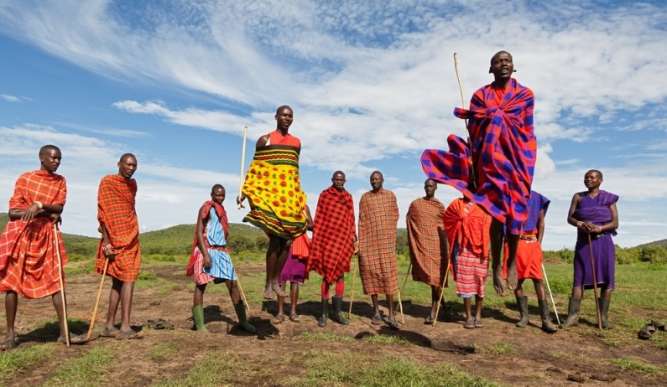

The Maasai are arguably the most famous of the African tribes. The red-clad Maasai of Kenya and Tanzania are synonymous with the great plains of East Africa.
These renowned warriors and pastoralists have roamed these lands for centuries, maintaining their traditional way of life despite modern pressures.
According to Maasai oral tradition, Maasinta, the first Maasai, received cattle as a sacred gift from Ngai, the sky god. Lowered to earth on a leather thong, these cattle established the Maasai’s deep connection with their herds—a relationship that defines their culture today.
The Maasai’s ancestral lands encompass some of East Africa’s most iconic landscapes, including the famous parks of Ngorongoro, Amboseli, Serengeti, the Masai Mara, and Tsavo.
Deepen your safari experience by meeting the African tribe of the Maasai on these authentic East African safaris:

The Hadza are an indigenous hunter-gatherer African tribe residing in Tanzania, around Lake Eyasi in the Arusha region. The Hadza predate modern Bantu speakers and have inhabited the Lake Eyasi region for thousands of years.
Hadzaland lies only 50 km from Olduvai Gorge, known as the Cradle of Mankind, and 40 km from the prehistoric site of Laetoli. This proximity to important archaeological sites suggests the Hadza have inhabited this area since at least the later Stone Age, around 50,000 years ago.
The Hadza are one of the last remaining groups of traditional hunter-gatherers in Africa. They maintain a unique and distinct way of life, relying on the surrounding savannah and woodland ecosystems for sustenance.
Their exceptional hunting and gathering skills allow them to collect diverse plant foods and engage in cooperative hunting.
Their social structure is characterized by collective decision-making without centralized leadership.
Men specialize in hunting and honey gathering, developing a special relationship with the honeyguide bird. Women are expert gatherers, collecting berries, tubers, greens, and eggs.
The Hadza language, Hadzane, is a language isolate spoken nowhere else in Africa. It serves as a unique identifier for the tribe and is primarily used in homes.
According to Hadza tradition, their history spans four distinct periods:
Visit the Hadza on these Northern Tanzania safaris:

The Samburu tribe from north-central Kenya are pastoralists from the great plains of the Samburu region.
They are closely related to the Maasai people of Kenya and are said to have migrated south from the Nile region of North Africa.
The Samburu people speak a dialect of the Maa language, which they share with the Maasai. The Samburu people are considered even more remote, as the region they inhabit is dry and supports less life.
Pastoralists: the Samburu raise primarily cattle but also keep other livestock, such as goats, sheep, and even camels. Because of the arid environment they inhabit, the Samburu people are traditionally among the nomadic African tribes.
Their diet, like the Maasai, consists of milk and animal blood, with eating the animals reserved for special occasions.
The Samburu people are renowned for their colorful clothing and unique social structure:
What sets the Samburu apart from other African tribes is its gerontocracy—a social structure governed strictly by elders. These leaders make all decisions and possess the power to curse younger members.
Their God Nakai is the ultimate source of power for this deeply religious tribe.
Visit this remarkable tribe on these Kenyan safaris:

The Karo people, residing in the Omo Valley of Ethiopia, are known for their vibrant cultural practices and unique way of life.
As the smallest African tribe in the Omo Valley, they maintain a close connection to the Omo River and the fertile lands around it.
Agriculture forms the foundation of Karo life. They practice flood-retreat cultivation along the riverbanks, similar to the ancient Egyptians along the Nile, growing sorghum, maize, and beans. The tribe also fishes and breeds goats and cattle.
The Karo are inherently artistic and renowned for their captivating body and face painting.
Using locally sourced materials such as white chalk, yellow mineral rock, iron ore, and charcoal, they create elaborate designs ranging from delicate dots to bold lines, often featuring animal motifs, such as guinea fowl patterns.
Visit the Karo on these Ethiopian safaris: