Physical Address
Block 308 DBM Plaza, Wuse Zone 1, Abuja, Nigeria
+2347062940253
Physical Address
Block 308 DBM Plaza, Wuse Zone 1, Abuja, Nigeria
+2347062940253

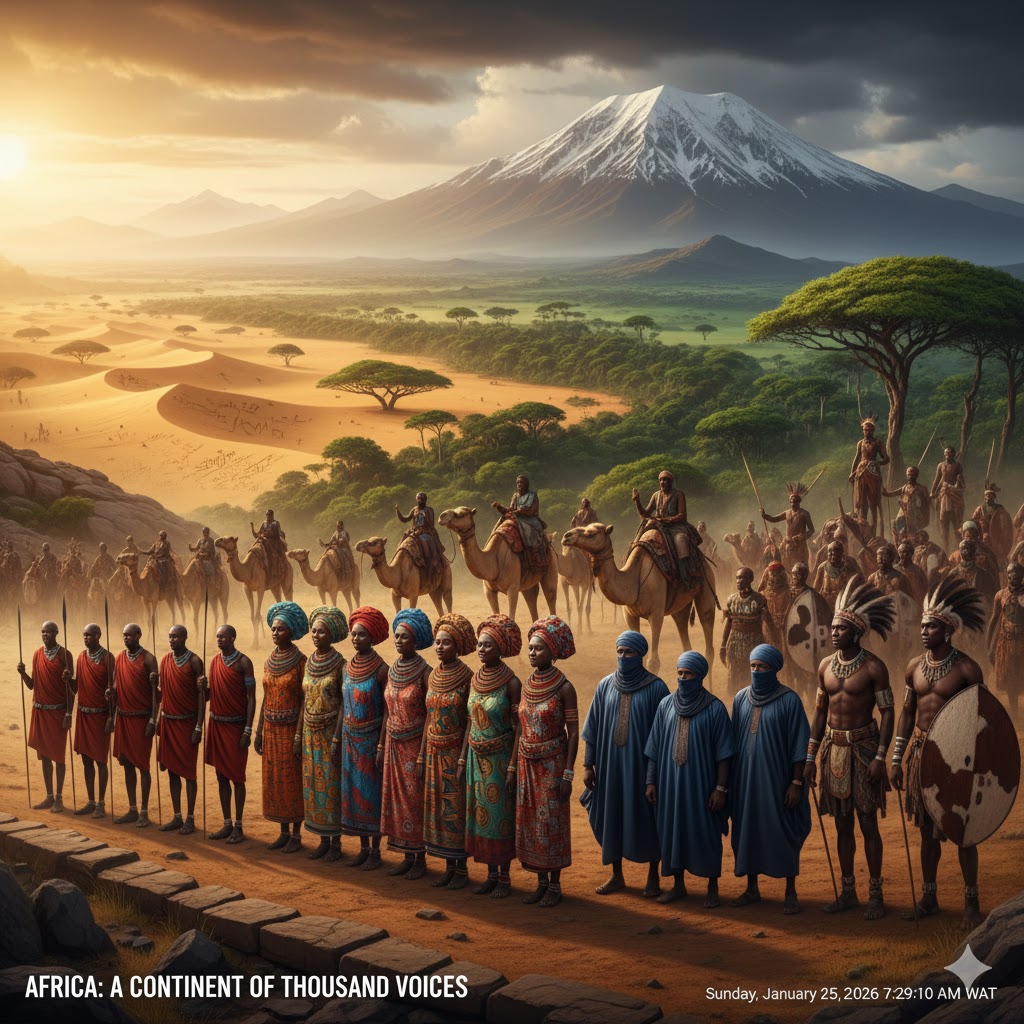
Africa’s identity is defined by its people. As the most genetically diverse continent on Earth, it is home to thousands of ethnic groups, each a unique custodian of history, language, and tradition. While the classification of these groups is a subject of ongoing academic debate, membership is generally defined by shared ancestry, homeland, and cultural heritage.
“Culture” in the African context is a multifaceted diamond, encompassing:
Geographically, this diverse human landscape stretches from the Mediterranean shores in the North to the Cape of Good Hope in the South, and from the Atlantic coast in the West to the Horn of Africa in the East.
Based on the data provided, here is a breakdown of key groups by region and language.
The Horn of Africa is dominated by Afroasiatic speakers, while the Great Lakes region features a mix of Bantu and Nilotic groups.
| Ethnicity | Primary Homeland | Language Family | Primary Religion |
| Amhara | Ethiopia | Afroasiatic (Semitic) | Orthodox Christian |
| Somali | Somalia / Ethiopia | Afroasiatic (Cushitic) | Islam (Sunni) |
| Luo | Kenya / Uganda | Nilo-Saharan (Nilotic) | Christianity |
| Abagusii | Kenya | Niger-Congo (Bantu) | Christianity |
This region is the heartland of the Niger-Congo family, specifically the Kwa and Mande branches, as well as the Chadic speakers of the north.
| Ethnicity | Primary Homeland | Notable Subgroups | Primary Religion |
| Akans | Ghana / Ivory Coast | Ashanti, Fante, Baoulé | Christianity |
| Yoruba | Nigeria | Ekiti, Oyo, Ife | Christianity / Islam / Orisha |
| Hausa | Nigeria / Niger | Hausaland tribes | Islam (Sunni) |
| Fula | West Africa / Sahel | Wodaabe, Toucouleur | Islam |
Dominated by the Bantu expansion, this region also holds the most ancient lineages of the Khoisan peoples and unique Creole cultures.
To understand the scale of African ethnicity, consider these figures: