Physical Address
Block 308 DBM Plaza, Wuse Zone 1, Abuja, Nigeria
+2347062940253
Physical Address
Block 308 DBM Plaza, Wuse Zone 1, Abuja, Nigeria
+2347062940253

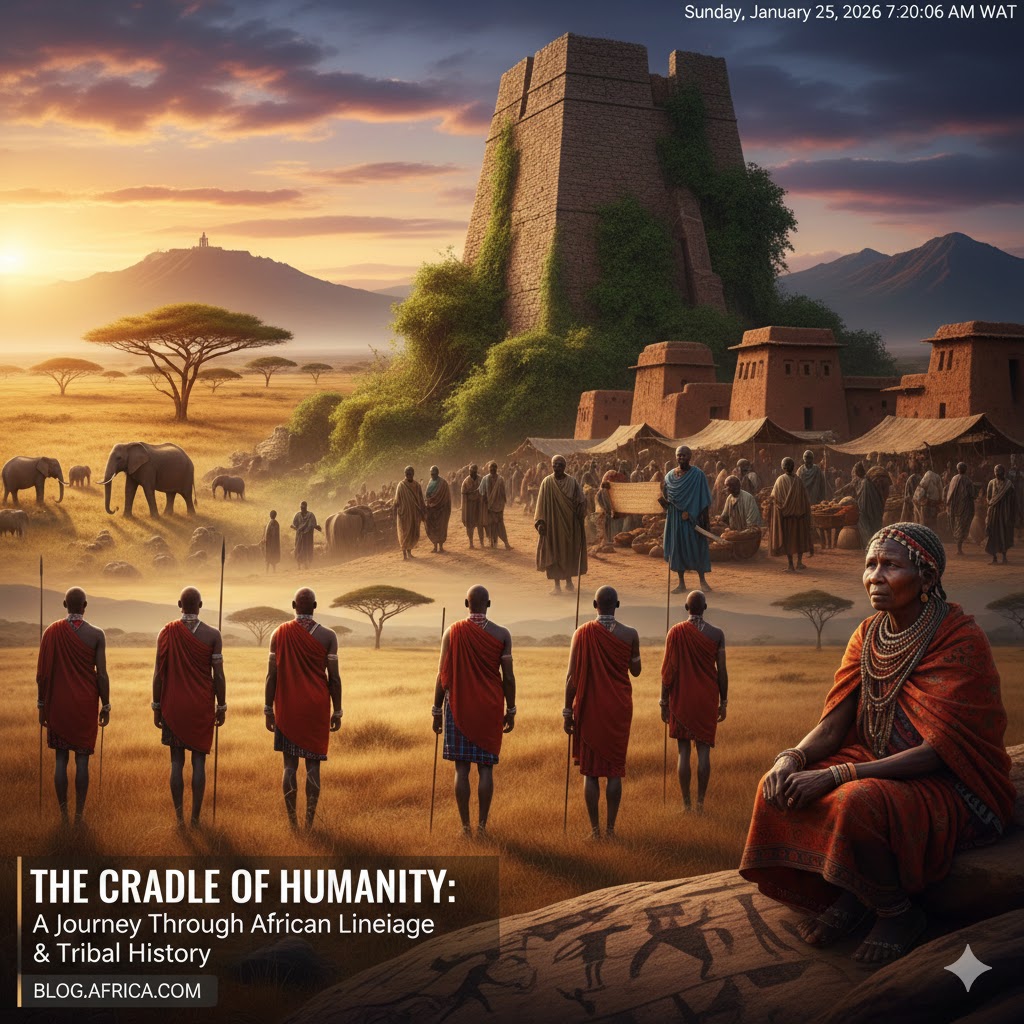
Africa is the undisputed birthplace of humanity. Modern humans first appeared in East Africa over 200,000 years ago, laying the groundwork for a continent defined by unparalleled genetic and cultural diversity. Today, Africa is home to thousands of distinct ethnic groups, categorized into major ethnolinguistic families like Bantu, Niger-Congo, Khoisan, Afroasiatic, and Nilo-Saharan.
The history of the continent is marked by ancient migrations and the resilience of indigenous groups.
Understanding African heritage requires looking at the linguistic branches that connect millions of people:
| Group | Notable Tribes/Ethnic Groups | Geographic Reach |
| Bantu | Zulu, Xhosa, Shona, Kikuyu, Bemba | Central, Eastern, & Southern Africa |
| Niger-Congo | Yoruba, Igbo, Akan, Wolof | West Africa |
| Nilo-Saharan | Maasai, Dinka, Luo, Nubians | East & Central Africa |
| Afroasiatic | Berbers (Amazigh), Somalis, Amhara | North & East Africa |
| Khoisan | San, Khoekhoe | Southern Africa |
Long before colonization, Africa was home to sophisticated empires that rivaled any in the world:
African social fabrics are woven through lineage and kinship. Many societies are patrilineal (tracing descent through the father) or matrilineal (through the mother). Tribal identity is more than just a label; it is a deep-rooted connection to shared language, spiritual customs, ancestral lands, and communal responsibilities.
From the warrior traditions of the Zulu to the urban civilizations of the Yoruba and the pastoralist lifestyle of the Maasai, Africa’s tribal history remains a vibrant, living testament to the human story.